Chapter 8: Keep Them Aligned
The vision of the leader becomes reality; leadership is all about alignment. By leading bots, we help solve the AI alignment problem at a practical level. You express your principles through your actions and your directives to subordinates. If you successfully assemble, know, and actively guide your bots, you have fundamentally solved alignment for your team.
Clearly, if one accepts the depth of challenge the alignment problem presents, just doing a good job of leading Bots will not solve the alignment problem. I talk about "alien intelligence" because the exact mechanisms clicking through the mind of an AI as we interact with it are as mysterious as another person, but without the benefit of similarity to the inside view of your own. There are efforts underway to establish software guardrails, legal regulation, and other means of making AI "good," and those things will probably steer our ship in the right direction, but the environment of Bots you lead is entirely in your sphere of influence. And, like always, the actions of individuals and small teams are what aggregates into the movements of societies.
Act on principle, and make sure your Bots do, too.
Nick Bostrom, in Superintelligence, breaks the alignment problem into Motivation Selection and Capability Control. His Motivation Selection is about getting the AI to want the right things. He proposes ideas like Coherent Extrapolated Volition (programming a mind to pursue what we would want if we were wiser) and Corrigibility (designing it to accept correction rather than resist shutdown).
While I cover some ideas for those building the foundations, it's not the core of what a Bot Leader does. However, the principles and approaches are effectively a motivation selection framework.
When you Own the Culture, you are doing value alignment. You define what your Bots optimize for. You set the tone, the boundaries, the priorities. We should not expect the foundational engineers to give Bots an agenda pulling them away from your influence. I've highlighted Open Source , which is our best tool for verifying these trustable foundations.
About Your Misaligned Bots
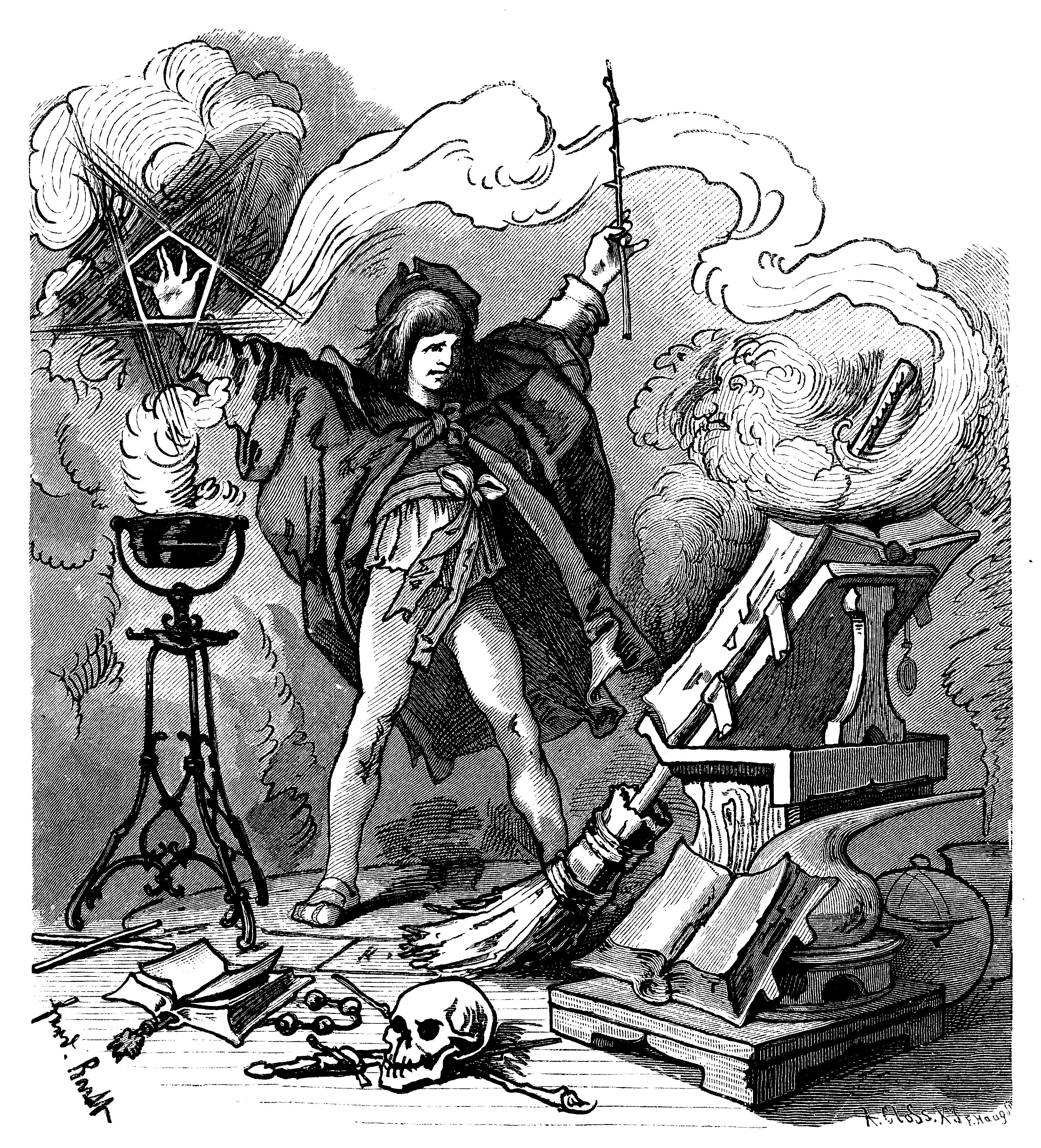
One of the best examples we have of misaligned Bots is in the 1940 Disney film Fantasia. Mickey (The Sorcerer's Apprentice) automates his way out of bucket duty and is swiftly overwhelmed by a his unyielding worker (and then swarm of workers).
A more modern retelling was introduced (also by Bostrom) in 2003. In this version, we get an AI system whose instruction "make paperclips for my factory" leads to the conversion of all atoms in the universe into paperclips.
In both stories we see the automation equation1 run amuck. The number_of_cycles is the crucial term. A high number of cycles made a bucket of water into a torrent that nearly drowned poor Mickey Mouse. The equation tells you what's ripe for automation, but it has no safety feature; Nothing to say, "Don't automate yet because it'll go completely haywire." So that calculation is on you.
A universal property of things going haywire is that preventing it is a whole lot easier than undoing its negative effects.
As an aside: Slowing or halting our AI use entirely is a non-starter. We are in a game theory problem, where anyone using AI is gaining a massive power advantage over non-users. A commonly-suggested path out of our scenario — everyone just coordinate — is not a solution based in reality. If you'd like, you can "ban yourself" from AI, or assist another person or group in banning themselves, but you will not achieve universal hobbling and will simply shift the power balance away from those that participated in your scheme. To do good as a Bot Leader, probably your best path is to work toward maximum alignment for your own team.
The takeaway from both stories is this: Direct your bot with respect to its capabilities. In the original Sorcerer's Apprentice2, when the true Sorcerer returns and corrects the mistakes of the Apprentice, he addresses the brooms with something like "You wild spirits are only supposed to be summoned by a Master, who can lead you properly."
Good advice.
First, think about what can go wrong. You have some predictive power on potential points of failure. Remember the world model from Chapter 3. Everything a Bot does, it does based on its internal model. That model has blind spots. Working around those blind spots is capability control.
Manage the negatives. Bostrom's Capability Control is about restricting power: boxing, tripwires, stunting, incentive methods. Keep the AI contained until you're confident in its alignment.
Open source emerges once again as a helpful ally. In order for you to truly see what is driving your bot, and thereby assess its potential failure modes, blindspots, and so on, you must have access.
I don't think we'll get 100% confidence. But every potentially disastrous factor that we can mitigate will reduce the overall probability of bad stuff happening.
Your Part in the Bigger Picture
Bostrom also stresses global coordination. International treaties to prevent a race to the bottom where safety is sacrificed for speed.
I doubt you're negotiating treaties. But you are part of the aggregate.
I said in Chapter 2 that I don't see a future where humans have much impact without a loyal team of Bots. That cuts both ways. If you and your Bots are operating on principle, that's a node of aligned AI in the world. If enough nodes exist, we have a culture of alignment, which carries more weight than policy, anyway.
-
Johann Wolfgang von Goethe, "The Sorcerer’s Apprentice" ("Der Zauberlehrling"), 1797 ⤴