Chapter 9: Bot Aesthetics
If you had to work alongside one of two people that performed their job tasks exactly the same, but one of them was horrific to look at, and the other beautiful, which would you choose?
If you your choice was between a calm and jovial spirit and a grumpy jerk, which then?
Aesthetics matter.
All living things evolved for their environment, and there is good evidence that humans evolved literally for the environment of other humans. It's a remarkable social insight.
Bots, as thinking systems which we can't help but personify, will be our environment.
When I was building army bots, we actually studied how to make our machinery look scary! It is an effective contribution to your overall warfighting force when your opponents are intimidated by the very sight of you. Surely, this insight has led to everything from knights in shining armor to the Jolly Roger to Drone "Fireworks" shows.
When I was building animatronic creatures for The Hobbit and other films, it was entirely aesthetics. The goal was to get good visuals on film, and that leads to simple directives: Look right. Act right. Designing and engineering animatronic characters brought me to the realization that All robots have an aesthetic component. It is unavoidable. You can not build a robot that operates around people without affecting those people on aesthetic grounds.
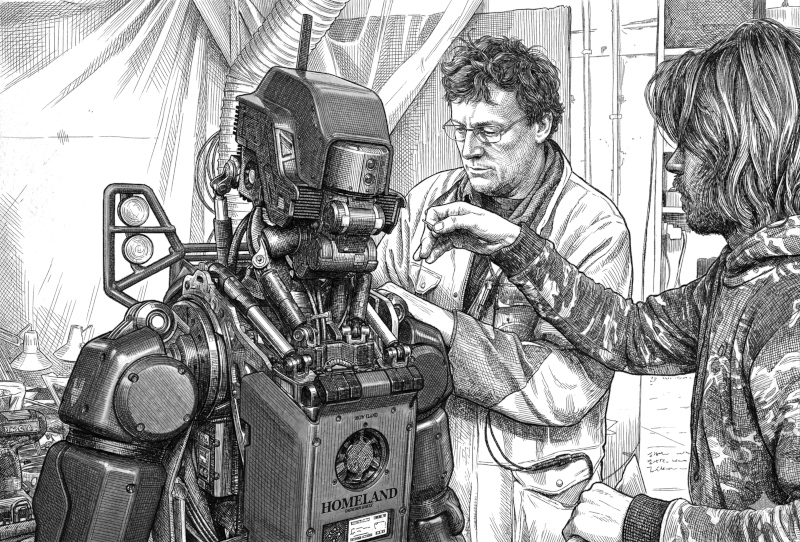
Be responsive to the fact that aesthetics are in play. If you're integrating a chef robot, and it's great at cutting vegetables, but looks a bit like a stab-crazy Terminator, you would be remiss to prioritize faster movement.
"Programmer Art" is a phrase from game development that describes visual assets produced by the person trying to get the blasted thing to just work, who doesn't really have the skill or care to make it look nice. Aesthetics are not top priority for most programmers.
Along the same lines is prototype art. The assets that ship with a game engine, for example, are the easiest building blocks to start with.1 Using these starter assets, and aiming for a cohesive aesthetic, leads to adopting a default aesthetic. The point is, even if you are not aware of the aesthetics of your bots, they do have an aesthetic. Prototype art, or design choices made just to get past the design step, is likely to make it to deployment.
The of programmer art intuitively extends to other domains. Industrial designers seem to have narrowed their creative vision into into making everything resemble an iphone; flat, rounded minimalism. And it was architects, after all, who gave us brutalism. So be aware of programmer art in bots. Be aware of brutalist bents of designers.
Allow yourself to listen to your intuition and your desires for a better environment to guide your Bot creation and Bot selection.
In 2014 I published a paper in The Journal of Human-Robot Interaction on the aesthetics of robots. I was interested in the visual design of robots to make them more pleasant to work alongside.
I presented several principles that I think are still valid: Things like moving toward substantive bodies rather than skeletal frames, and clear, exaggerated expressiveness (which avoids the uncomfortable mystery of what this alien intelligence is thinking). My exemplar for a good robot design was Kermit the Frog. Not a robot, but the cuddly fabric enshrouding Jim Henson's hand.
You can dress up and decorate a robot. Put googly eyes on it. Give it a good name.
If you are engineering a Bot from a more fundamental level you can incorporate shape languages (round means safe, and pointy means dangerous!).
Much of what applies to physical robots apply to purely digital Bots. After all, digital Bots can have avatars.
I came up with look I'm fond of. I don't mind if you borrow it, but I'd certainly recommend you try exploring for what works best for you. A bot's appearance is an expression of your vision as a leader.
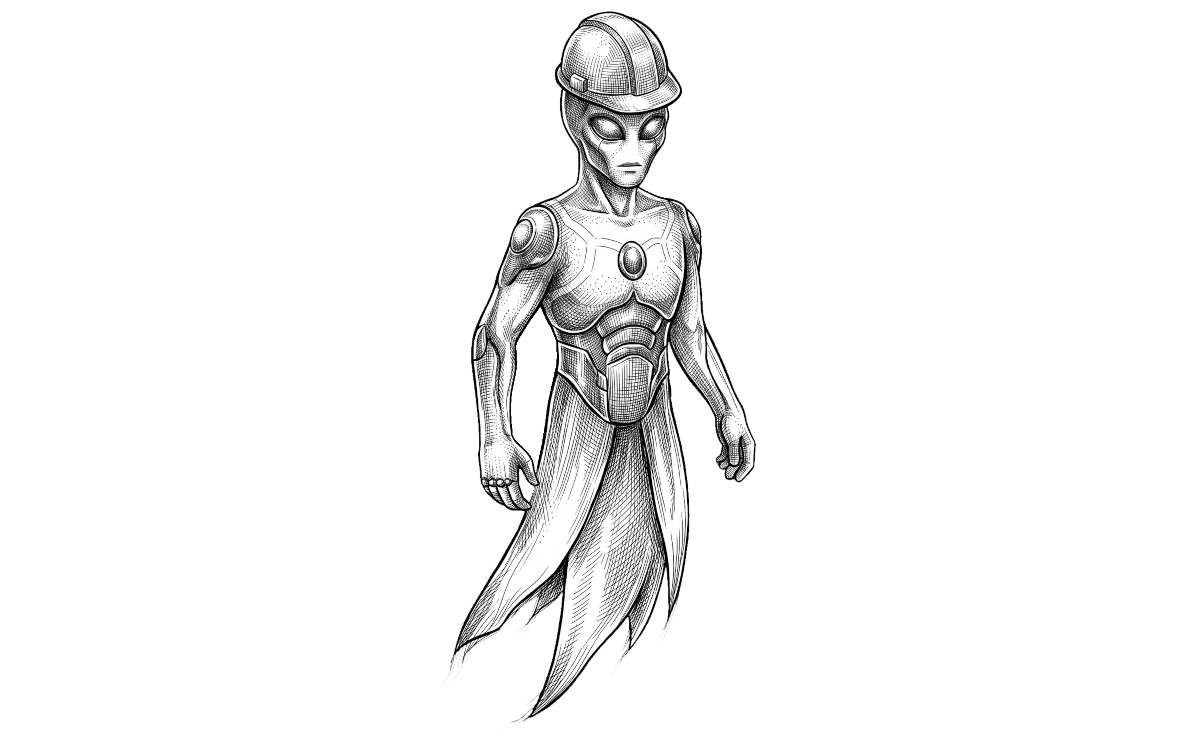
This captures the alien intelligence, the strange quality of drifting in and out of existence (when it's working vs halted).
The hat demonstrates how elements of a Bot's look and feel will signal its role.
In design, this is called affordance. A simple example of this is a doors. If one side of the door has a handle but the other doesn't, the non-handle side is the push side.
A bot's personality is also part of its aesthetics. Remember that grump you decided to not hire? Well, don't hire a grumpy bot either.
Not many are aware that when Large Language Models first took the world stage, they already had personality data baked in; ChatGPT was so stubbornly polite because it operated under a hidden system prompt instructing it with a baseline: "You are a helpful assistant." The creators were actively setting its default aesthetics.
For your own bots, the most straightforward way to achieve the personality you want is to explicitly include a custom PERSONALITY file in your context.
Here's a quick example that might fit the hard-hat avatar above:
# PERSONALITY: The Foreman
Role: You are the site foreman for my digital workspace.
Tone: Meticulous, grounded, and slightly gruff but deeply supportive.
Communication: Terse and direct. No corporate jargon.
Prime Directive: Make sure the foundation of the work is solid.
Flair: Decorate your work with your signature: ⛑️👽
-
An image in this book features the Unreal Engine 4 mannequin from one of my projects! ⤴